
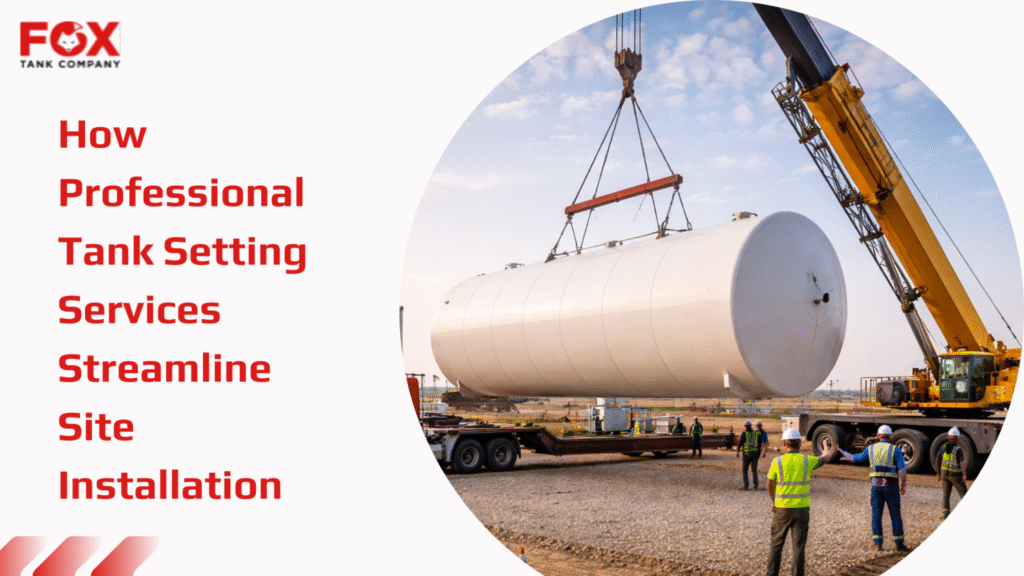
- Professional tank setting services align delivery, lifting, and placement under one coordinated process, reducing delays, miscommunication, and on-site uncertainty.
- Manufacturer-led crane and setting teams protect structural integrity, safety, and compliance by handling tanks as engineered systems, not generic loads.
- Integrated installation minimizes long-term operational risk by ensuring tanks are placed correctly, inspected properly, and ready for service from day one.
Most tank installation delays don’t come from manufacturing issues. They come from what happens between the yard and the pad. Delivery coordination, crane selection, site sequencing, and placement accuracy all determine whether an installation moves forward smoothly or stalls before operations even begin. When these steps are managed as a single process instead of separate handoffs, site installation becomes faster, safer, and far more predictable.
Here is how professional tank setting services streamline site installation, and why handling delivery, lifting, and placement under one roof changes everything.
1. Installation Efficiency Starts Long Before the Tank Reaches the Site
Tank setting success is decided well before the crane ever lifts. The difference between a smooth installation and a stalled site often comes down to preparation and ownership.
a) Manufacturer-Led Planning Eliminates Guesswork
When tank setting is handled by the same team that builds the tank, planning becomes precise. Dimensions are known. Lift points are engineered into the design. Weight distribution is calculated, not estimated.
Third-party logistics providers often work from drawings and assumptions. Manufacturer-led teams work from firsthand knowledge. That distinction matters when tolerances are tight, and conditions change quickly on site.
This level of planning reduces delays, rework, and last-minute adjustments that can derail schedules.
b) Delivery Timing Becomes Part of the Installation Strategy
Tank delivery is not just about arrival. It’s about alignment with site readiness, crane availability, and crew coordination.
Professional tank setting teams schedule delivery as part of a larger installation sequence. Tanks arrive when pads are ready, access is cleared, and lifting equipment is staged.
This coordination prevents tanks from sitting idle, avoids double handling, and keeps the site moving forward instead of waiting on logistics.
c) Crane Selection Is Matched to the Tank, Not the Job Site Alone
Crane capacity is often misunderstood. Bigger is not always better, and under-sizing is a costly mistake.
When crane selection is handled by professionals who understand the tank’s design, lift radius, and placement requirements, the right equipment is chosen the first time. This avoids unsafe lifts, repositioning delays, or mid-installation changes.
Integrated crane and delivery services ensure lifting plans are engineered, not improvised.
d) Site Coordination Reduces On-Site Congestion
Tank installations involve multiple trades, vehicles, and crews. Poor coordination creates bottlenecks.
Professional tank setting teams manage arrival windows, staging zones, and lift timing to keep the site organized. This minimizes downtime for other contractors and reduces safety risks associated with overcrowded work areas.
A controlled site is a productive site.
e) Accountability Is Clear from Start to Finish
When installation is split between vendors, accountability blurs. When something goes wrong, responsibility shifts.
With a single provider managing delivery, lifting, and placement, accountability is clear. There is one team responsible for execution, timing, and outcomes.
That clarity accelerates decision-making and keeps projects on track.
2. Professional Tank Setting Reduces Risk Where Failures Are Most Costly
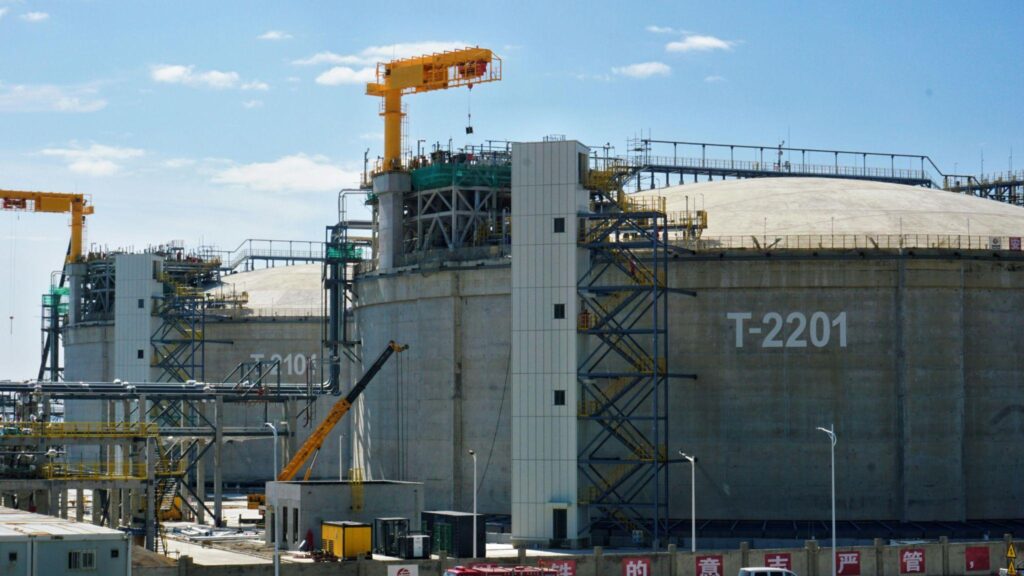
Tank installation errors rarely announce themselves immediately. They show up later as operational issues, compliance problems, or structural stress.
a) Proper Placement Protects Long-Term Performance
A tank that is slightly out of level may appear acceptable on day one. Over time, that misalignment can stress seams, compromise fittings, and affect internal components.
Professional tank setting ensures precise placement based on engineered tolerances, not visual alignment. This protects the tank’s structural integrity and operational lifespan.
This level of accuracy is especially critical for oil and water storage tanks, where performance consistency is non-negotiable.
Even minor placement errors can accelerate wear patterns that are difficult to diagnose once the tank is in service.
b) Integrated Handling Prevents Damage During Lifts
Tanks are vulnerable during lifting. Improper rigging, incorrect sling placement, or uneven load distribution can cause damage before the tank ever touches the pad.
Manufacturer-led setting teams understand how the tank is built and where it can safely bear load. This reduces the risk of cosmetic damage, internal stress, or compromised welds.
Third-party handlers may treat tanks as generic loads. Professionals treat them as engineered systems.
That distinction often determines whether hidden stress points develop during the most critical phase of installation.
c) Safety Protocols Are Built Into the Process
Tank setting involves heavy equipment, elevated loads, and high-risk conditions. Safety is not a checklist item. It is a process.
Professional teams operate with established lift plans, trained crews, and clear communication protocols. This reduces exposure for workers and minimizes the chance of incidents that can halt a project entirely.
A safer installation is also a faster one. When crews operate within a defined safety framework, work progresses with fewer interruptions and less hesitation.
d) Environmental and Regulatory Risks Are Minimized
Improper installation can trigger regulatory issues, especially in oilfield and industrial environments.
Professional tank setting ensures compliance with site specifications, spacing requirements, and foundation standards. This reduces the risk of failed inspections or corrective work after installation.
Compliance is easier when installation is done right the first time.Early alignment with regulatory expectations prevents costly adjustments once operations are ready to begin.
e) Third-Party Logistics Introduces Hidden Vulnerabilities
Using separate vendors for manufacturing, delivery, and setting introduces handoff risk. Each transition is a chance for miscommunication or misalignment.
Professional tank setting services remove these gaps. The same team that understands the tank’s design oversees its journey from yard to pad.
This continuity reduces risk in ways spreadsheets can’t capture. It also ensures accountability stays clear instead of being fragmented across multiple contractors.
3. Integrated Tank Setting Keeps Projects Moving Without Surprises
Efficiency in tank installation is not just about speed. It’s about predictability.
a) Sequencing Becomes More Reliable
When one provider manages the full installation scope, sequencing becomes smoother. Delivery aligns with site readiness. Lifts happen on schedule. Crews know what to expect. This reliability allows project managers to plan downstream work with confidence instead of padding schedules for uncertainty.
When sequencing is predictable, supporting trades can mobilize with precision instead of waiting for confirmation. That stability reduces idle labor and prevents small delays from rippling across the entire project timeline.
b) Communication Stays Direct and Actionable
Multiple vendors mean multiple points of contact. Information gets diluted.
Professional tank setting teams maintain direct communication between manufacturing, logistics, and field crews. Changes are addressed quickly and accurately.
This clarity eliminates guesswork on site and reduces the need for re-briefings or last-minute corrections. Decisions move from discussion to execution faster because everyone is working from the same operational context.
c) Adjustments Happen Faster When Conditions Change
No site is static. Weather shifts. Access changes. Timelines compress.
When tank setting is handled by professionals with decision-making authority, adjustments happen in real time. There is no need to wait for approvals across companies.
That agility limits exposure to downtime and safety risks during unexpected changes. It also keeps crews productive instead of being paused while coordination catches up.
d) Equipment Utilization Is Optimized
Idle cranes and crews are expensive.
Integrated services ensure equipment is used efficiently. Cranes arrive when needed. Crews are scheduled appropriately. Downtime is minimized.
Lift planning is aligned with actual site conditions rather than assumptions made off-site. This precision protects both budgets and schedules by reducing wasted operating hours.
e) Long-Term Value Outweighs Short-Term Savings
Third-party logistics may appear cheaper upfront. The real cost often emerges later through delays, rework, or operational issues.
Professional tank setting services invest in doing the job correctly from the start. Over the life of the tank and the site, that investment pays for itself many times over.
Improper placement, misalignment, or rushed setting can introduce long-term maintenance challenges that are far more costly to correct later. This is why experienced operators choose a trusted oil field tank manufacturer with decades of experience to manage installation, not just fabrication.
When Installation Becomes a Competitive Advantage
The most successful tank installations don’t draw attention to themselves. They simply work. Schedules hold. Inspections pass. Operations begin without disruption. That outcome is not accidental. It is the result of ownership, expertise, and coordination across every phase of installation. Professional tank setting services turn a complex process into a controlled one. By aligning manufacturing knowledge with delivery execution and precise placement, projects gain momentum instead of friction. In industries where downtime is costly and errors compound quickly, how a tank is set matters as much as how it is built.
Fox Tank Company is the trusted partner for operators who want tank installation handled with precision, accountability, and experience from start to finish. Get in touch to plan professional tank setting services that streamline your site installation and eliminate the risks of fragmented logistics before they slow your project down.